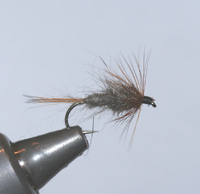
The Pat’s Nymph is one of those flies that Smoky Mountain fly fishing guides just love. It has a buggy look that fish can’t resist and it’s relatively quick and easy to tie. While the Pat’s Nymph is good year round, it’s particularly good in the spring since it’s a good representation of several aquatic insects.
Hook: #12-14 Standard Nymph Hook
Underbody: .010 – .015 Lead Free Wire
Thread: 6/0 Black
Tail: Brown Hackle Fibers
Body: Any shaggy gray dubbing material like squirrel or muskrat. I particularly like Wapsi Sow-Scud dubbing
Collar: Brown Hackle
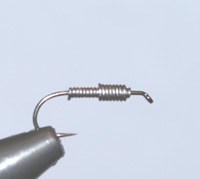
Step 1. Starting at the rear of the hook wrap the lead free wire forward, then wrap back over the first layer of wire about 50% of the way back. This makes the fly heavy enough to sink in turbulent water and also adds shape to the body.
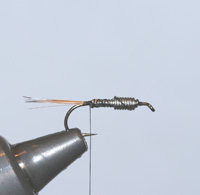
Step 2. Wrap the thread on just in front of the wire underbody, then wrap over the wire toward the rear of the hook. Be sure the wire is locked into place by the thread. Strip a few brown hackle fibers from a feather and tie them in just in front of the bend. Clip the butts. A variety of hackles will work for this since dry fly quality feathers are not required.
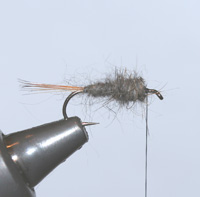
Step 3. Twist dubbing fibers onto the thread. Dubbing wax may help, but this is not something we use. Be sure the body of the fly has a shaggy appearance. Taper the body. Leave about one and a half hook eye’s length between the dubbing and the eye of the hook.
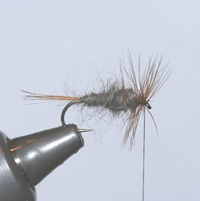
Step 4. Tie in the hackle. Use either inferior dry fly hackle or hen hackle. Make one or two wrap depending on the density of the hackle fibers on the feather, then tie it off and clip the excess.
Step 5. Pull the hackle fibers back with the thumb and forefinger, then wrap the thread back over it and make a head. Tie it off with a series of half hitches or a whip finish and take it fishing.
The Pat’s Nymph is excellent in a number of situations when nymphs are required. It’s a heavy fly and sinks well. This is important in cold water or turbulent water. It also makes for one half of an excellent dropper rig along with another nymph. It can weigh down other nymphs like a #16 Beadhead Pheasant Tail or add even more weight to a big stonefly pattern like a #8 Tellico Nymph.
Some anglers are turned off by the scraggly appearance of this somewhat ordinary looking fly, but it should not be ignored. Its drab color scheme imitates a variety of aquatic insects and its weight gets it down where the fish are. We’ve even noticed that fish seem to like it more as it gets chewed up. One of our fishing buddies used to grind the fly under his boot heel before tying it on and claimed that made it more enticing to fish!